
Why Iran Is Now Targeting the Entire Middle East
EXECUTIVE SUMMARY: Iran’s recent missile and drone attacks across the Gulf mark a dangerous expansion of the Islamic Republic’s regional war. The Islamic Republic appears to be widening the battlefield beyond American and Israeli targets by pressuring Gulf Cooperation Council states that had previously attempted to maintain neutrality in the conflict. This strategy risks transforming potential mediators into adversaries while strengthening regional security cooperation between Israel, the United States, and Sunni Arab states. Iran’s escalation reflects internal vulnerabilities within the clerical regime, including the economic crisis, political repression, and growing domestic unrest. By projecting power externally, Tehran seeks to reinforce its ideological authority while diverting attention from internal instability. Ultimately, Iran’s expanding aggression may achieve the opposite of its intended goal by accelerating the formation of a broader regional coalition that is determined to contain its ambitions and restore stability to the Middle East.
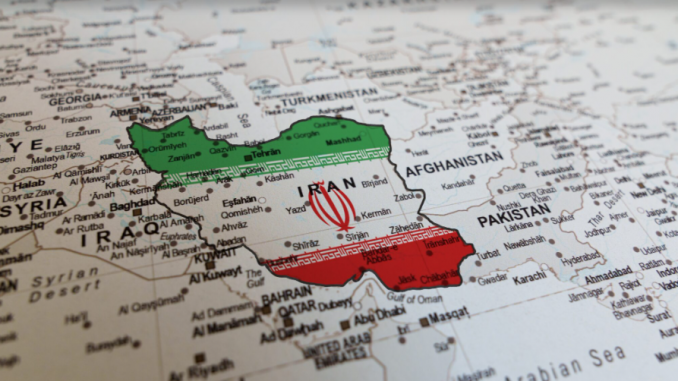
Iran’s latest missile and drone strikes across the Gulf signal a dangerous strategic shift. What once appeared to be a confrontation primarily between Tehran, Israel, and the United States is rapidly transforming into a wider regional conflict. By conducting military assaults on Saudi Arabia, Qatar, the United Arab Emirates, and Bahrain, the Islamic Republic has effectively widened the battlefield and placed the stability of the entire Middle East at risk.
On March 7, 2026, Iranian President Masoud Pezeshkian publicly apologized to Iran’s Gulf neighbors after Iranian missile and drone strikes triggered air defense alerts in those states. In a televised statement, he expressed regret for the attacks and claimed that Tehran would halt strikes on neighboring countries unless attacks against Iran originated from their territory. But even as he spoke, air defense sirens and missile interceptions were continuing across the Gulf region.
For many governments in the Middle East, the contradiction is glaring. Iran’s apology appeared less a genuine effort at de-escalation and more a familiar Iranian tactic: spinning rhetorical damage control while continuing its aggression.
This pattern is hardly new. For decades, the Islamic Republic has pursued a strategy that blends diplomacy, denial, and deception with relentless expansionism. The result is a geopolitical doctrine aimed not merely at confronting Israel or the United States but at reshaping the entire Middle East under Tehran’s ideological and strategic dominance.
Iranian leaders have long framed their military posture as defensive, but the reality unfolding across the Middle East tells a very different story. Missiles fired toward Saudi territory, drones intercepted over Gulf cities, and attacks linked to Iranian proxies across multiple theaters point to a broader strategy of coercion. Rather than confining its conflict to direct adversaries, Tehran is increasingly pressuring neutral or semi-neutral states in order to expand the battlefield.
The remarks of Muhammad‑Bagher Ghalibaf, speaker of Iran’s parliament, made this explicit. Ghalibaf declared on social media that Iran’s defense doctrine follows the ideological guidance of the Islamic Republic’s revolutionary leadership and warned that peace will remain impossible as long as American military bases exist in the region.
This statement was effectively a strategic threat to every Middle Eastern state hosting American forces. It confirmed what regional leaders have long suspected: Iran views the entire Gulf security architecture, not merely Israel, as a legitimate target.
One of the most striking aspects of Iran’s recent escalation is that it has drawn states into the conflict that were actively attempting to avoid confrontation. Countries across the Gulf Cooperation Council had pursued diplomatic efforts to reduce tensions between Iran and its adversaries. Oman, for example, had played a leading mediating role in discussions surrounding Iran’s nuclear program.
Yet Iranian missiles and drones have now placed these very states directly in the line of fire. Strategically, this approach is baffling. By striking Gulf territories or allowing projectiles to fall near critical infrastructure, Tehran risks transforming potential mediators into determined adversaries. Analysts have long warned that attacks on Gulf states could collapse the region’s delicate neutrality and push Arab governments into closer alignment with the United States and Israel. In other words, Iran’s escalation may be strengthening the very coalition it claims to oppose.
The Islamic Republic’s behavior cannot be understood purely in military terms. At its core lies an ideological framework embedded in the doctrine of Vilayat-e-Faqih: “Guardianship of the Islamic Jurist”. This system, created after the Iranian Revolution, grants ultimate political authority to the clerical leadership rather than elected institutions. The result is a hybrid regime in which electoral politics exist but real power rests with a religious elite that defines foreign policy through ideological confrontation.
For this leadership, regional dominance is not merely a strategic ambition. It is a revolutionary obligation. From Iraq to Syria, Lebanon, and Yemen, Tehran has cultivated proxy networks that extend its influence far beyond its borders. These networks allow Iran to wage asymmetric warfare while maintaining plausible deniability. The expansion of this strategy into the Gulf itself marks a new and dangerous phase.
Iran’s confrontation with Gulf states is not only militarily reckless. It is economically self-destructive. The Persian Gulf and the Strait of Hormuz form one of the most vital arteries of global commerce. Disruptions in the region affect energy markets, maritime trade routes, and strategic industrial supply chains.
Iranian actions that threaten shipping lanes risk destabilizing not only regional economies but also global technological industries. Qatar, for example, plays a significant role in the export of helium, a critical resource used in semiconductor manufacturing and advanced technologies. Any disruption in Gulf logistics reverberates across industries ranging from artificial intelligence to aerospace.
If Tehran’s objective is to impose costs on its adversaries, it must recognize that such disruptions will also inevitably damage Iran itself. Economic isolation, sanctions pressure, and investor flight are predictable consequences of escalating regional conflict. In strategic terms, Iran’s current approach resembles an “economic own goal”—a policy that undermines its own long-term stability.
The Islamic Republic’s external aggression reflects deep internal vulnerabilities. Years of economic hardship, corruption scandals, and political repression have eroded public confidence in the ruling establishment. Anti-government protests have repeatedly shaken the regime, revealing widespread dissatisfaction across Iranian society. The leadership in Tehran therefore faces a familiar dilemma.
Authoritarian systems often attempt to consolidate power by redirecting domestic frustration toward external enemies. Foreign confrontation becomes a tool for internal cohesion. In this context, escalation abroad may serve a political purpose at home: reinforcing the narrative that Iran is surrounded by hostile forces and must rally behind its revolutionary leadership. Yet such strategies carry enormous risk. History demonstrates that regimes relying on external conflict to sustain legitimacy often accelerate their own downfall.
The Middle East now faces a critical strategic question: Will Iran’s campaign of intimidation continue unchecked, or will the threatened regional states coordinate a collective response? The growing convergence of security interests between Israel and several Arab states represents one possible outcome. Iranian escalation may inadvertently accelerate regional cooperation against Tehran’s ambitions. The normalization processes that began in recent years could gain renewed urgency if the Gulf states conclude that Iran’s threats are directed not only at Israel but at the entire regional order.
At the same time, the United States remains a central factor in the strategic equation. In Tehran’s calculus, American military installations across the Gulf serve as both deterrents and potential targets. Iran’s repeated warnings about these bases indicate that the regime views the broader American security architecture as a critical obstacle to its regional ambitions.
Another factor shaping Iran’s future is the question of leadership. The Islamic Republic now faces a profound political vacuum. Despite widespread dissatisfaction with the regime, no unified opposition figure has yet emerged capable of mobilizing the population around a coherent alternative vision. This absence of leadership allows the ruling clerical establishment to maintain its grip on power even as public frustration grows. Yet history suggests that such conditions rarely remain static. The pressures created by economic stagnation, international isolation, and internal dissent can eventually converge to bring about transformative political change.
For Iran, the central challenge is whether a new leadership capable of reconciling the country with its neighbors and the international community will emerge before the current system pushes the region into wider conflict.
The Iranian regime’s recent missile and drone attacks across the Gulf reveal a dangerous strategic reality: Tehran’s confrontation is no longer limited to Israel or the United States. It is evolving into a broader campaign of intimidation against the entire Middle Eastern order.
By targeting or threatening Gulf states that had sought neutrality, the Islamic Republic risks uniting the region against it. By escalating military pressure while offering hollow diplomatic apologies, it exposes the contradiction at the heart of its strategy. And by prioritizing ideological confrontation over economic stability, it places the welfare of the Iranian people at risk.
If the current trajectory continues, Iran will not succeed in dominating the Middle East. Instead, it may accomplish the opposite—driving its neighbors, the United States, and Israel into an increasingly unified coalition determined to contain the ambitions of a regime whose revolutionary ideology has turned regional leadership into a permanent state of war.
Salah Uddin Shoaib Choudhury is editor of the Bangladesh-based publication Blitz and a commentator on Islamist extremism, terrorism, and South Asian geopolitics.